Behind the carefully crafted narratives of innovation, philanthropy, and global stewardship, a hidden war is raging among three of the world’s most powerful men. Elon Musk, Bill Gates, and Warren Buffett—each publicly hailed for their commitment to solving climate change—are now facing accusations that their real goal is not saving the planet, but securing domination over the emerging trillion-dollar green economy.
The rivalry is not just ideological. It is a clandestine competition fueled by ego, wealth, and the pursuit of a monopoly over the technologies that will define the post-carbon future. And according to insiders across the tech and finance sectors, what looks like a race to stop climate disaster may actually be a brutal campaign to convert environmental collapse into personal gain, no matter the cost.
Elon Musk has positioned himself as the face of sustainable transportation and clean energy, using Tesla as his flagship in the green revolution. With electric vehicles, solar roofs, and lithium battery storage, Musk claims to offer the most scalable solutions for decarbonizing the economy. But beneath the sleek branding lies a calculated effort to monopolize the infrastructure of clean mobility.
Tesla’s rapid expansion into battery supply chains, its aggressive lobbying to shape EV tax policies, and Musk’s strategic investments in mineral mining all point toward a deeper ambition: to own the pipelines that power the electric future. Far from a climate crusader, Musk may be engineering the kind of vertical monopoly that critics say could turn the sustainability movement into a private empire.
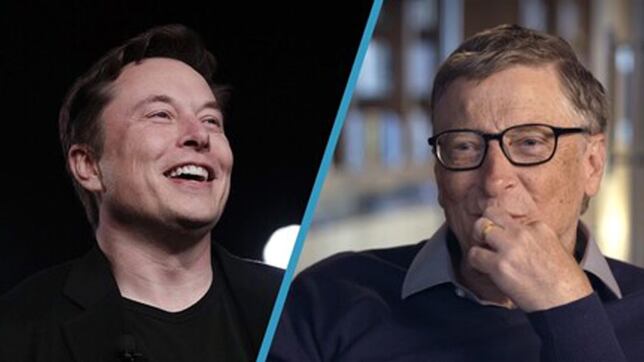
Meanwhile, Bill Gates has emerged as a softer but no less ambitious contender in the green tech race. Through Breakthrough Energy, a venture capital initiative disguised as climate philanthropy, Gates has poured billions into nuclear energy startups, lab-grown meat, carbon capture experiments, and clean hydrogen projects.
While these investments promise revolutionary outcomes, few of them are commercially viable at scale. Yet Gates continues to double down, wielding influence over public policy and global research funding through his foundation’s connections.
Some critics accuse him of manipulating the discourse on climate to benefit the technologies he quietly bankrolls, placing himself as a global gatekeeper of what gets funded, approved, and implemented in the name of environmental progress.
Then there is Warren Buffett, who has largely avoided the spotlight in the climate debate but may be playing the most opaque and strategic game of them all. His holding company, Berkshire Hathaway, has invested heavily in utilities, railroads, and energy companies, including those involved in wind and solar. But analysts suggest that Buffett’s involvement in green energy is more about hedging than vision.
Rather than betting on new technology, Buffett is positioning himself to control the slow transition away from fossil fuels, profiting from both sides of the energy equation. This has led to growing allegations that Buffett is quietly backing “cool” green investments to maintain public approval while ensuring that his traditional assets remain indispensable for decades.
Publicly, the three billionaires take occasional jabs at each other. Musk has mocked Gates’ understanding of EVs and has accused Buffett of being stuck in the past. Gates has criticized Musk’s approach as reckless and his messaging as misleading. Buffett, in his signature stoic style, avoids direct confrontation but has hinted that both men overestimate the power of disruption in industries governed by slow capital turnover and infrastructure limitations.
But sources close to each figure suggest that these public spats mask a much deeper animosity. What is unfolding is not merely a competition of ideas, but a struggle for dominance over a market expected to surpass $100 trillion globally by 2050.
This competition has wide-reaching consequences. As the world rushes to embrace green energy, many nations are relying on the private sector to drive innovation and build scalable solutions. In doing so, they are inadvertently handing the keys to climate survival to a small group of billionaires whose interests may not align with those of the public. This raises a critical question: can the climate crisis be solved by the same ultra-rich elite that benefited from the systems responsible for creating it?
Even more concerning is the way each billionaire is leveraging political influence to tilt regulations in their favor. Tesla has received billions in subsidies and tax credits while opposing the unionization of its workforce. Breakthrough Energy has lobbied international governments to fast-track experimental technologies without rigorous independent oversight.

Berkshire Hathaway has used its financial clout to shape utility regulations that favor existing infrastructure over disruptive innovation. These maneuvers reveal a disturbing pattern: the climate crisis is not just being commercialized, it is being captured by capital.
Meanwhile, on the ground, the promised green transition remains incomplete. EV infrastructure is still fragmented, with charging deserts across entire regions. Renewable energy adoption is stalling in places where the grid cannot accommodate intermittent sources. Technologies like carbon capture and green hydrogen remain in pilot stages with uncertain returns. But the money continues to flow—into projects that enrich their backers, not necessarily the planet.
What these billionaires have successfully done is turn a looming existential threat into an opportunity for branding, lobbying, and portfolio diversification. Each now commands an army of engineers, lobbyists, influencers, and investors, carefully curating a narrative of environmental heroism while quietly structuring global supply chains, patent ownership, and regulatory frameworks to cement their dominance.
The result is a green tech race where winning is less about solving climate change and more about owning the solutions that governments and populations will have no choice but to adopt.
The public, meanwhile, is left with carefully staged PR campaigns, soaring costs, and the illusion that progress is happening faster than it is. The tragedy is not that these men are profiting from climate change. The tragedy is that they may be designing a world where no one else can.
As the climate crisis accelerates, it is crucial to ask whose future is really being built. Are Musk, Gates, and Buffett the visionaries who will lead humanity out of ecological collapse? Or are they the architects of a new monopoly—one that trades fossil fuel empires for renewable oligarchies? The evidence suggests that the answer may be both. They are shaping the future, yes—but it is a future built in their image, on their terms, and for their profit.
Whether that future is sustainable for the rest of us remains to be seen. But one thing is clear: the climate war is not only being fought in the atmosphere. It is being fought in boardrooms, on balance sheets, and behind closed doors—where power, not principle, determines who gets to save the world.
